Siam Legal International, a Thailand-based full-service law firm with more than 20 years of operation, is advising senior professionals and internationally mobile executives on the Thailand Privilege Visa as consultations from this demographic increase and the nature of those inquiries becomes more complex.
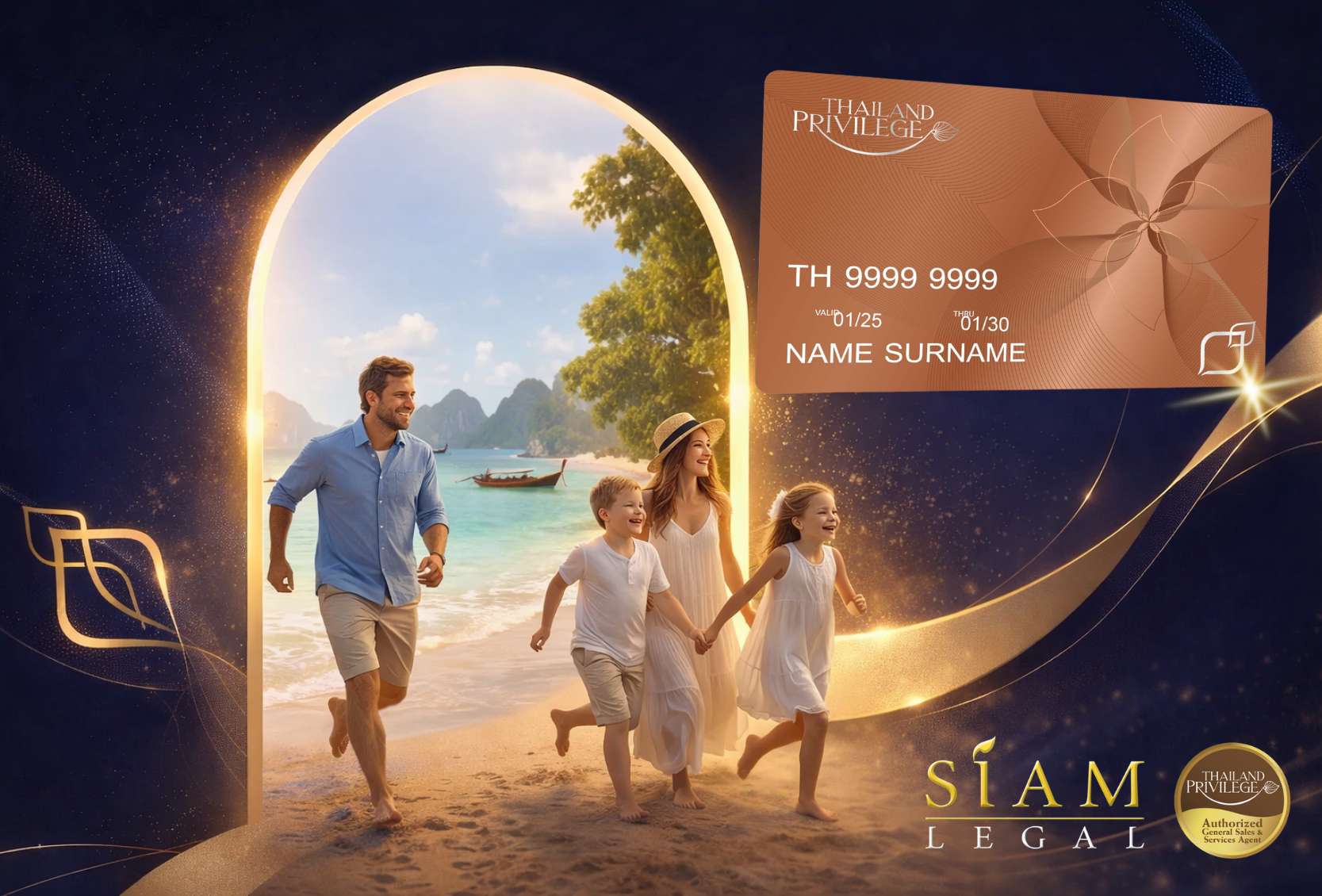
Senior professionals and remote executives are approaching Thailand Privilege Card applications with a different set of priorities than in previous years, with legal certainty, administrative simplicity, and family considerations now driving demand more than lifestyle appeal.
The Thailand Privilege Visa is administered by Thailand Privilege Card Co., Ltd., or TPC, under the supervision of the Tourism Authority of Thailand. Unlike conventional immigration pathways that require income thresholds, age requirements, or a defined route toward permanent residency, the program operates as a membership-based residency product. Applicants pay a one-time fee in exchange for a long-term, renewable, multiple-entry visa ranging from 5 years to more than 20 years, along with government concierge services and VIP airport access designed to reduce the administrative friction of long-term stays in Thailand. The program has served more than 40,000 members from over 50 nationalities across 23 years of operation and is reported to contribute an estimated 50 billion baht in annual economic impact in Thailand.
According to Siam Legal International, the profile of applicants has shifted considerably. Where earlier demand was concentrated among retirees and lifestyle-oriented foreign nationals, current consultations more frequently involve senior professionals in their 40s and 50s, executives managing regional operations, and families planning multi-year relocations. These applicants are typically evaluating Thailand Privilege alongside other long-term residency options in Portugal, the UAE, and Singapore, and the factors they prioritize have changed. Residency certainty and administrative simplicity are consistently ranked above tax optimization, particularly among applicants who already have structured income arrangements. For families, international school availability and private healthcare quality tend to be assessed before financial considerations.
"The executives coming to us about Thailand Privilege have usually done significant research before the first conversation," said Rex Baay, Senior Immigration Consultant and Operations Manager at Siam Legal International. "They have compared multiple jurisdictions, they understand the difference between a membership-based visa and a traditional immigration pathway, and they have specific questions about how their income structure and family situation interact with Thai law." The conversation has moved well beyond 'how do I get the visa' to 'how does this fit into my broader legal and financial picture.'"
Several factors have contributed to growing interest in the program among this demographic. Governments in a number of European countries have tightened or closed investor visa programs that previously attracted high-net-worth individuals seeking long-term residency and, in some cases, a pathway to citizenship. That contraction has prompted internationally mobile professionals to reassess their options in other regions. Thailand Privilege's structure: a defined, time-limited residency is increasingly viewed as a transparent and operationally practical alternative. The program does not offer a route to a Thai passport, and for executives who want a credible Southeast Asian base without making an open-ended immigration commitment, that clarity is a practical advantage.
Tax residency is among the most consequential legal considerations for Thailand Privilege members who intend to spend the majority of their time in Thailand. The point at which a foreign national becomes a Thai tax resident is time-based, and the implications differ depending on individual income structure, asset location, and applicable double taxation agreements. Siam Legal International recommends that applicants seek independent legal and tax advice specific to their circumstances before committing to a long-term residency arrangement in Thailand.
"Thailand Privilege provides a clear and well-supported residency framework, but it is one part of a broader legal picture," Baay noted. Applicants who work through their tax position, asset structure, and family requirements before applying are in a considerably stronger position than those who treat legal planning as a follow-up step. Getting the sequencing right at the beginning avoids issues that are more difficult to address once residency has already been established."
The firm serves as an official General Sales and Services Agent, or GSSA, of Thailand Privilege Card Co., Ltd., and advises applicants on the full range of legal considerations that accompany Thailand Privilege Visa membership, including visa selection, tax planning, and property acquisition.
Siam Legal International is a Thailand-based law firm with offices in Bangkok, Chiang Mai, Phuket, and Pattaya. The firm provides legal and immigration services to expatriates, investors, families, and businesses in Thailand. Its practice areas include immigration, corporate law, property, family law, litigation, criminal defense, notarial services, and related legal support.
https://www.youtube.com/watch?v=-i9YgLvZcZo
###
For more information about Siam Legal International, contact the company here:
Siam Legal International
Rex Baay
+662 254 8900
info@siam-legal.com
18th Floor, Unit 1806 Two Pacific Place,
142 Sukhumvit Rd, Khlong Toei,
Bangkok 10110, Thailand