
As United States households prepare for the fall and winter heating season, RTZEN is drawing attention to an often-overlooked detail in home energy habits: the hardware that lets curtains move fully open and closed. The focus follows the U.S. Energy Information Administration's September 9, 2026 Short-Term Energy Outlook, which forecasts average residential electricity prices at 18.20 cents per kilowatt-hour in 2026, up from 17.30 cents in 2025, an increase of roughly 5.2 percent. The same outlook forecasts residential natural gas rising to $15.93 per thousand cubic feet, compared with $15.29 in 2025.
Those higher figures arrive alongside long-standing federal guidance on windows. The U.S. Department of Energy reports that heat gain and heat loss through windows account for approximately 25 to 30 percent of residential heating and cooling energy use. For cold weather, the Department recommends opening curtains during daylight hours to make use of solar warmth and closing them at night to reduce the effect of cold windows.
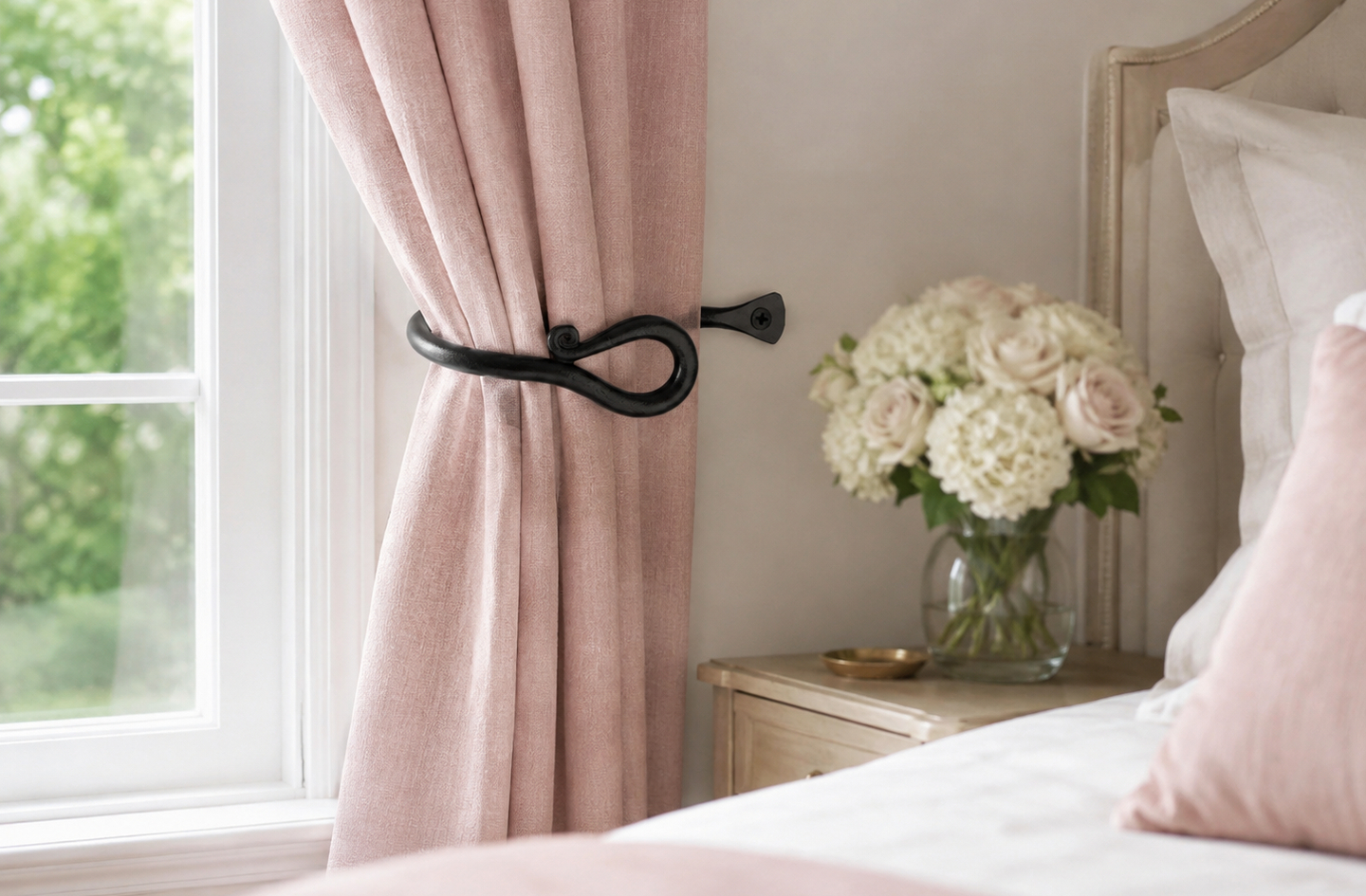
RTZEN's resources address selection across several dimensions. The RTZEN Curtain Holdbacks Guide defines holdbacks as wall-mounted hardware that keeps opened drapery away from the window and covers holdback type, metal and finish, curtain weight, placement height and decorative style.
That daily open-and-close routine depends on curtains functioning as movable window coverings rather than static décor. Holdbacks that are too shallow or poorly positioned can leave fabric partially covering the window when panels are meant to be open, or make heavy drapes awkward to gather and release. RTZEN, a family-owned wrought iron brand operating since 1997, has addressed these practical questions across its curtain-hardware resources.
"Homeowners tend to think about their curtains and forget about the hardware holding them," said Rami Abramson, product specialist at RTZEN. "When a holdback does not project far enough for the fabric stack, part of the window stays covered even when the curtain is supposed to be open. Matching projection depth to curtain weight is what makes the seasonal routine the Department of Energy describes actually workable."
The RTZEN Curtain Tieback Hooks Guide explains that larger arms with five to six inch projection are intended for thicker lined, blackout or layered curtains, while lighter sheers require far less clearance.
Abramson noted that repeated use places ongoing demands on both hardware and wall mounting. "Heavier drapes opened and closed every day put steady stress on the bracket and the anchor," he said. "Fabric weight, arm projection, wall type and metal construction all interact, and getting them right is what keeps the piece functional over years of use." For material questions, the RTZEN Metal Curtain Holdbacks Guide compares wrought iron, steel, brass and aluminum for durability and finish.
RTZEN, operated by Iron-Craft, specializes in handcrafted wrought iron home and office hardware rooted in traditional blacksmithing. Its production process includes cutting the iron, hand-forging it, zinc galvanization and powder coating, and its products carry a Lifetime Warranty against material and workmanship defects under normal use. The curtain holdback family includes Flower, Loophole and Swirls designs, with sizing tied to curtain thickness and weight.
###
For more information about RTZEN, contact the company here:
RTZEN
Rami Abramson
info@rtzen-decor.com
16192 Coastal Highway Lewes
Delaware 19958
USA