
GrinderCrusherScreen has released a new educational blog post, “Air Curtain Burners vs. Grinding: Which One Do You Need?”, to help wood waste and land clearing operations across North America choose the right equipment for their material and markets. The company, a long‑time recycling equipment wholesaler, uses the article to give contractors, waste handlers, and site owners a clear comparison between air curtain burners and horizontal grinders, focusing on how each option works in the field, what it costs to run, and when it makes sense to deploy one or both solutions. By addressing a decision that directly affects operating costs, project timelines, and regulatory compliance, GrinderCrusherScreen positions the post as a practical guide for anyone processing wood waste from land clearing, forestry, construction, or disaster cleanup.
The new blog breaks down the two main choices most operators face: burn the material or grind it. It explains that an air curtain burner is a controlled combustion system that uses a high‑velocity wall of air to contain smoke while burning clean wood waste and vegetative debris at high temperatures, reducing material to a thin layer of ash with nothing left to haul or stockpile. In contrast, a horizontal grinder is described as a size reduction machine that uses a spinning drum with carbide‑tipped hammers to break wood waste into smaller pieces, turning debris into reusable products such as mulch, biomass fuel, compost feedstock, erosion control material, or hog fuel. As the article puts it, the fundamental difference is that a burner eliminates material while a grinder transforms it, a distinction that sits at the heart of the equipment choice.
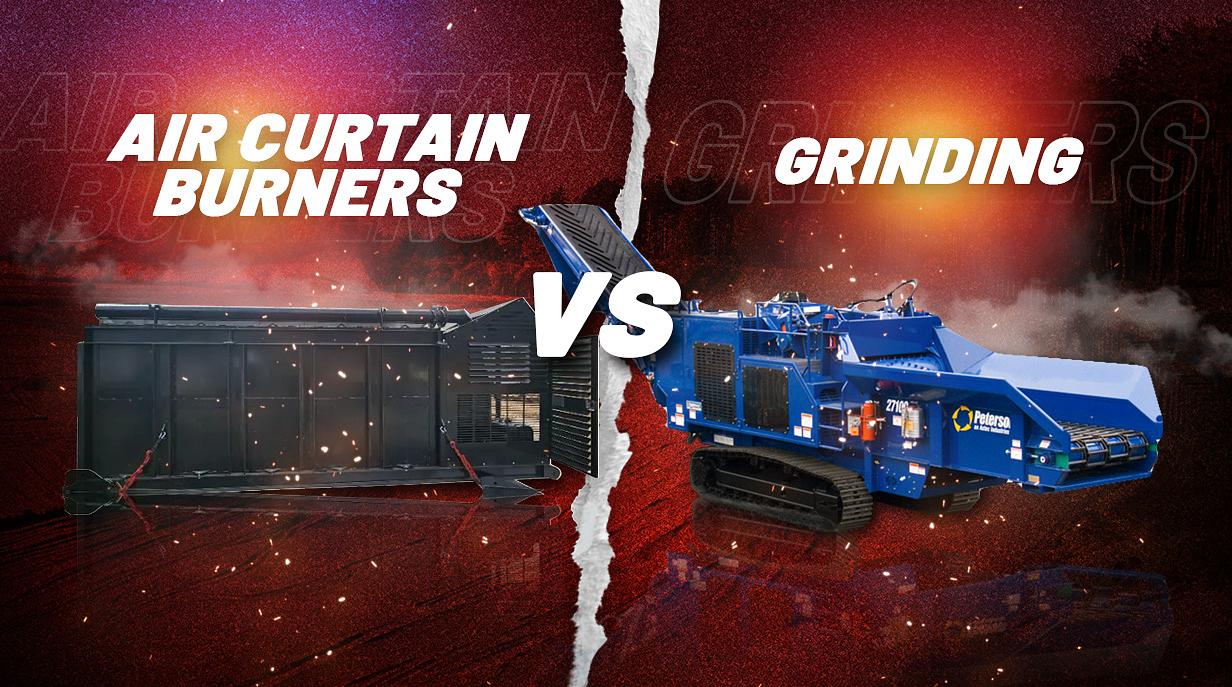
The blog then walks readers through scenarios where an air curtain burner is the better fit. It highlights projects where there is no end market for ground material, the job site is remote, or the primary goal is fast disposal of clean wood rather than product creation. Land clearing debris, forestry slash, storm damage, and agricultural waste are all identified as strong candidates for burning when the goal is complete elimination of low‑value material. The post notes that in disaster debris response, air curtain burners can process storm and wildfire debris quickly because the material disappears on site, avoiding the need to find destinations for thousands of yards of ground wood in the middle of an emergency.
In parallel, the article outlines the situations where grinding is the smarter route. It points out that grinders make more sense when the end product has value and there are established markets for mulch, biomass fuel, or compost feedstock. The content explains that grinders can handle a wider range of materials, including mixed or contaminated streams with treated lumber, painted wood, and construction debris that are unsuitable for air curtain burning. It also emphasizes that grinding is often the only realistic option in areas where burn bans, air quality rules, or local ordinances limit or restrict air curtain burner use, since grinders do not trigger the same air permitting concerns.
A key section of the blog addresses the combined use of both technologies and acknowledges that many large operations already run air curtain burners and grinders side by side. The grinder typically processes merchantable wood waste that can be sold as mulch, biomass, or compost feedstock, while the burner handles stumps, root balls, dirty brush, and other low‑grade debris that is not worth the cost of grinding and hauling. According to the article, this “best of both worlds” approach maximizes value from high‑quality material and eliminates the rest quickly, often cutting total project time significantly on large clearing jobs compared to using only one machine. This nuanced view underlines the company’s practical, equipment‑agnostic stance.
The cost comparison section is designed to give readers a straightforward framework for evaluating their own operations. For air curtain burners, the blog cites equipment purchase or rental, diesel fuel in the approximate range of 1 to 3 gallons per hour depending on unit size, and permitting as the main cost drivers, while noting that there is no product to haul or manage after burning. For grinders, the article lists higher fuel consumption—often 15 to 40 or more gallons per hour for a large horizontal grinder—plus the need for a loader to feed the machine, trucking to haul the ground product, and a site to stockpile material, all balanced against potential revenue from product sales where markets exist. The post states that for pure disposal with no product revenue, burning is usually cheaper per ton, but when ground product sells well, the economics can favor grinding.
“The question we hear every week is whether someone should invest in a grinder, an air curtain burner, or both,” said Alex Laldin, Marketing Director at GrinderCrusherScreen. “We wrote this piece to give contractors a straight comparison they can use before they spend serious money on equipment. The goal is to help them match the right machine to their material, their markets, and their permitting reality, not to push them in one direction.” His remarks reflect the company’s focus on giving operators clear information rather than one‑size‑fits‑all answers.
Laldin also emphasized the importance of considering job type and logistics, especially on large or remote projects. “If you are an hour from the nearest road with no market for mulch, grinding everything may not make sense,” he explained. “In those situations, an air curtain burner can clear a site fast without leaving huge piles to haul. On the other hand, if you are close to markets that pay for ground products, a grinder can turn what used to be waste into a profit center. Many of our customers end up using both tools over time because their work is not all one kind of job.”
The new blog post is grounded in GrinderCrusherScreen’s decades of experience supplying, supporting, and financing equipment for the recycling and aggregate sectors. The company has been assisting customers with their recycling equipment needs since 1973 and operates out of Smyrna, Georgia, where it maintains a large inventory of new and used equipment along with an industry‑leading parts department. With in‑house engineers, experienced sales professionals, and a broad lineup that includes grinders, screens, crushers, conveyors, and now air curtain burners through partner offerings, GrinderCrusherScreen is well positioned to give operators practical advice on matching machines to real‑world requirements.
“Because we sell both air curtain burners and grinders, we are in a unique position to talk about where each shines and where each falls short,” Laldin added. “That is why the article ends by inviting readers to call in and walk through their specific material types, volumes, and locations with our team. We would rather help someone choose the right path now than see them stuck with the wrong machine later.” The blog closes with a direct invitation to call 770‑433‑2670 for a one‑on‑one discussion about equipment options, reinforcing the company’s commitment to accessible, real‑world guidance.
The release of “Air Curtain Burners vs. Grinding: Which One Do You Need?” is part of GrinderCrusherScreen’s broader effort to publish practical content that bridges the gap between theory and day‑to‑day operations in the recycling and land clearing sectors. Alongside equipment listings, parts support, financing information, and customer case stories, the company’s blog now includes a growing library of articles that cover air curtain burner basics, return‑on‑investment considerations, and trade show updates for composting and recycling professionals. This mix of resources gives contractors and site owners a place to learn, compare options, and make more informed equipment decisions.
GrinderCrusherScreen is a North America‑focused recycling equipment dealer that has helped contractors, recyclers, and aggregate producers source new and used equipment since 1973. From its base in Smyrna, Georgia, the company stocks a wide range of machines including horizontal grinders, tub grinders, crushers, screens, conveyors, shredders, and support equipment, as well as parts for most major brands. GrinderCrusherScreen backs its inventory with experienced sales staff, in‑house engineers, and a brick‑and‑mortar parts department that helps reduce downtime by keeping key components available stateside. Customers rely on the company for equipment selection, trade‑ins, parts support, and practical advice on turning waste streams into profitable products. For more information or to read the full blog post “Air Curtain Burners vs. Grinding: Which One Do You Need?”, visit https://grindercrusherscreen.com.
###
For more information about GrinderCrusherScreen, contact the company here:
GrinderCrusherScreen
Rick Cohen
(770) 433-2670
Sales@GrinderCrusherScreen.com
1772 Corn Rd, Smyrna, GA 30080