
Ed’s Collision 1 is publishing consumer guidance that gives drivers a more focused way to understand hood and front body damage after a collision. The guidance identifies four areas technicians can evaluate when a front-end impact involves the hood: hood condition and operation, alignment with neighboring panels, damage to adjoining components, and vehicle-specific repair requirements.
Information about the facility is available through the Ed’s Collision 1 Maple Grove location page.
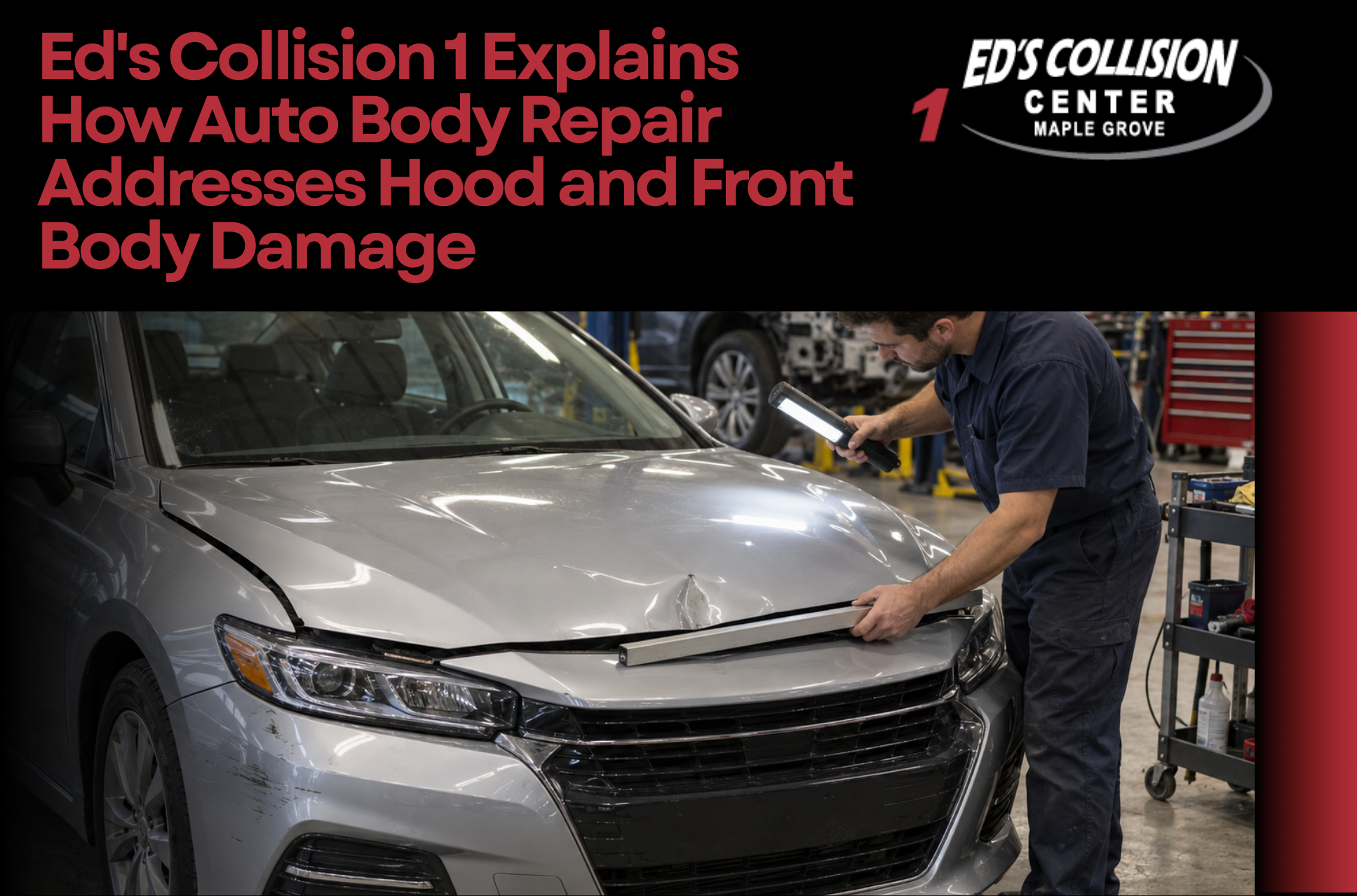
The hood itself provides the first area of evaluation. Collision damage can include dents, creases, buckling, scratches, chipped paint, or deformation around edges and attachment areas. Technicians can consider the hood's material, construction, damage severity, finish condition, and location of the impact before determining whether repair or replacement is appropriate.
Hood operation can provide additional information. If a hood that previously opened and closed normally becomes difficult to operate or sits differently after an accident, technicians can evaluate the hood along with applicable hinges, latch areas, and surrounding components. A change in operation does not automatically establish which component was damaged.
Alignment with neighboring panels is the second consideration. The hood sits between the front fenders and above the grille, bumper, lamps, and other front body components. A collision can change the gaps or relationships among these parts.
For example, one side of the hood may sit differently relative to a fender, or the front edge may appear uneven after an impact. These changes can help identify which components require closer evaluation. Pasted markdown
Through auto body repair services, technicians can evaluate the documented condition of individual exterior components before selecting the repair method.
The third area is adjoining front body damage. A front-corner impact may involve a fender, bumper, grille, or headlamp in addition to the hood. A displaced bumper corner, loose grille, or lamp that no longer sits evenly can indicate that mounting or attachment areas should also be examined.
When exterior components prevent a complete inspection, limited disassembly may provide access to relevant mounting locations. Additional access can confirm the initial repair plan or identify collision-related conditions that could not be documented from the exterior.
The fourth consideration is vehicle-specific repair information. Hood and front body components can differ in materials, construction, attachment methods, and electronic equipment across makes, models, and model years. Manufacturer repair information can help identify procedures that apply to the specific components involved.
Modern vehicles may also have cameras, radar-related equipment, parking sensors, wiring, or other electronics around front collision areas. Their presence does not mean every front-end repair requires the same diagnostic or calibration procedures. The vehicle, affected components, and repair operations determine which procedures apply.
When a collision affects multiple areas, the collision repair process can incorporate the documented damage into a coordinated repair plan. Repairable components can receive applicable body work, while components that do not meet appropriate repair conditions may require replacement.
Refinishing may also be required when paint has been damaged or conventional body work affects the exterior surface. The physical panel condition is addressed before the applicable preparation and refinishing work is completed.
The October guidance is intended to clarify that a damaged hood should not automatically be treated as either an isolated dent or evidence that the entire front end is damaged. The repair scope depends on what the collision actually affected.
For drivers, the practical takeaway is to report changes such as uneven hood gaps, different hood operation, displaced bumper corners, loose grille components, or altered lamp positioning after an accident. Those observations can provide useful information while technicians determine the documented repair needs.
Ed’s Collision 1 is located at 10758 County Rd 81, Maple Grove, MN 55369. The Maple Grove facility provides auto body and collision repair services as part of Collision Center 1.
###
For more information about Ed’s Collision 1, contact the company here:
Ed’s Collision 1
Jerald Stiele
(763) 425-0077
EdsCollisionCC@gmail.com
10758 County Rd 81, Maple Grove, MN 55369