The gravel flies before anyone even sees it coming.
One moment, a driver is cruising south on I-25 with Pikes Peak filling the rearview mirror. The next, a rock the size of a dime launches from a semi's rear tires and connects with the hood at 70 miles per hour. By the time the vehicle pulls into the driveway, there's a chip in the clear coat that won't stop demanding attention.
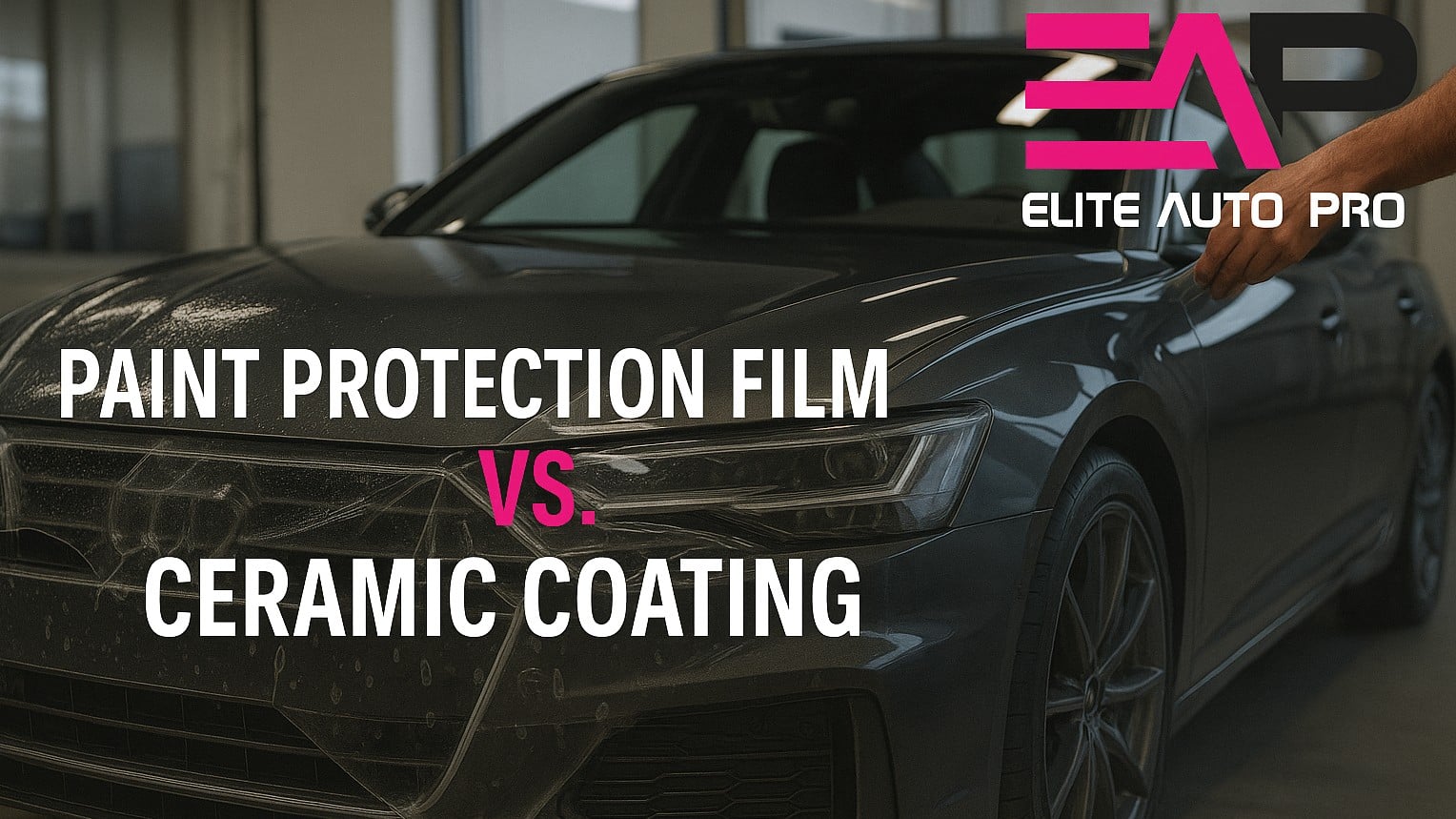
It's a story every Colorado driver knows — and it's the reason more Front Range vehicle owners are rethinking a question that has become one of the most important decisions in automotive care: Paint Protection Film or Ceramic Coating?
Colorado Is Not a Forgiving Place for Car Paint
Before evaluating the options, consider the environment. Colorado roads present a punishing combination of variables that drivers in milder climates don't encounter. Construction is near-constant along major corridors. Mountain roads are routinely scattered with loose aggregate and road debris. Winters bring aggressive sand-and-gravel treatments that linger through spring. And at altitude, UV radiation is measurably more intense — the paint-degrading effects of the sun amplify significantly above 6,000 feet.
The team at Elite Auto Pro, a boutique automotive protection shop in Colorado Springs, sees the results firsthand: new vehicles arriving with rock chips before the first oil change. The culprit, more often than not, is a persistent misconception — that ceramic coating protects against rock chips.
It does not.
What Ceramic Coating Actually Does (and Doesn't)
Ceramic coating is a remarkable product. A professional-grade coating bonds chemically to the vehicle's clear coat, creating a hardened, semi-permanent layer that delivers hydrophobic water-beading, UV resistance, easier cleaning, and a depth of gloss that can make a two-year-old car look showroom-fresh.
What it cannot do is absorb a physical impact. The coating is measured in microns — it adds surface hardness and chemical resistance, but a sharp piece of gravel traveling at highway speed carries enough kinetic energy to breach clear coat, primer, and bare metal. A ceramic coating will crack along with the paint beneath it.
For daily drivers navigating Colorado Springs roads, the question of whether ceramic coating protects against rock chips has a clear answer: not meaningfully. This is not a criticism of ceramic technology. It is simply the wrong tool for that particular problem.
Paint Protection Film: Built for Impact
Paint Protection Film — PPF — operates on an entirely different principle. Rather than hardening the surface, it absorbs and disperses impact energy. Modern PPF is a thermoplastic urethane film, typically between 6 and 10 mils thick, that sits atop the paint as a physical sacrificial barrier.
High-quality PPF, such as the Geoshield Ceramic Guard film installed at Elite Auto Pro, includes a self-healing topcoat that allows minor scratches to disappear with heat. The film is optically clear, precision-cut to fit specific vehicle models, and when professionally installed, is essentially invisible.
For Colorado drivers weighing paint protection film vs. ceramic coating for rock chip defense specifically — PPF is the rational choice. The most vulnerable areas benefit most: the full hood, front bumper, fenders, side mirrors, and rocker panels. These are the first surfaces to meet whatever the road throws at a vehicle.
The Cost Conversation
No honest discussion is complete without addressing the cost difference between PPF and ceramic coating in Colorado Springs.
A professional ceramic coating installation typically ranges from several hundred to over a thousand dollars, depending on paint correction, layers, and product tier. Full-vehicle PPF represents a more significant investment — often $4,500 to $7,000 or more depending on coverage and film brand.
The better question is not which costs less, but which prevents more. A single hood repaint at a quality body shop can run $800 to $1,500. A set of front-end chips severe enough to warrant attention can cost hundreds in repair work. Viewed through that lens, PPF frequently pays for itself faster than most owners expect.
Many clients at Elite Auto Pro ultimately choose a combined approach: PPF on the high-impact zones where physical protection is critical, and ceramic coating applied over the entire vehicle — including over the PPF — for UV resistance, gloss enhancement, and long-term ease of maintenance. The two technologies are not competitors. At their best, they are partners.
The Daily Driver Reality
For anyone evaluating the best paint protection option for a new car in Colorado, the variables lean consistently in one direction. Modern vehicles are expensive. Factory paint is thinner than it was a generation ago. Colorado's environment is harder on vehicles than most of the country. And paint damage — chips, scratches, fading — directly affects resale value.
The PPF conversation, once reserved for exotic vehicles, has moved into the mainstream. Pickup trucks. Daily commuters. Family crossovers. Drivers across every segment are arriving at the same conclusion: protecting a significant investment is worth doing correctly.
None of it matters, however, without quality installation. PPF applied with poor technique — lifting edges, visible seams, contamination beneath the film — can look worse than no protection at all. Elite Auto Pro distinguishes itself through meticulous paint correction prior to any protective application, precision film cutting, and exacting process standards at its Colorado Springs facility.
Colorado's roads will keep throwing rocks. The only question is whether the paint is ready.
For a free, no-obligation quote on PPF, ceramic coating, or window tint, visit Elite Auto Pro in Colorado Springs or call 719-375-1252. The shop is located at 949 Elkton Dr, Unit B, Colorado Springs, CO 80907.
Elite Auto Pro
949 Elkton Rd
Unit B
Colorado Springs
CO
80907
United States