Choice Collision Center announced a continued focus on scans and calibration services as vehicle manufacturers continue integrating advanced safety technologies into modern vehicle designs.
According to the company, many of today's vehicles rely on electronic systems that assist with accident prevention, driver awareness, and vehicle operation. These systems often include cameras, radar units, sensors, and advanced driver-assistance technologies that may require inspection and calibration following a collision or repair.
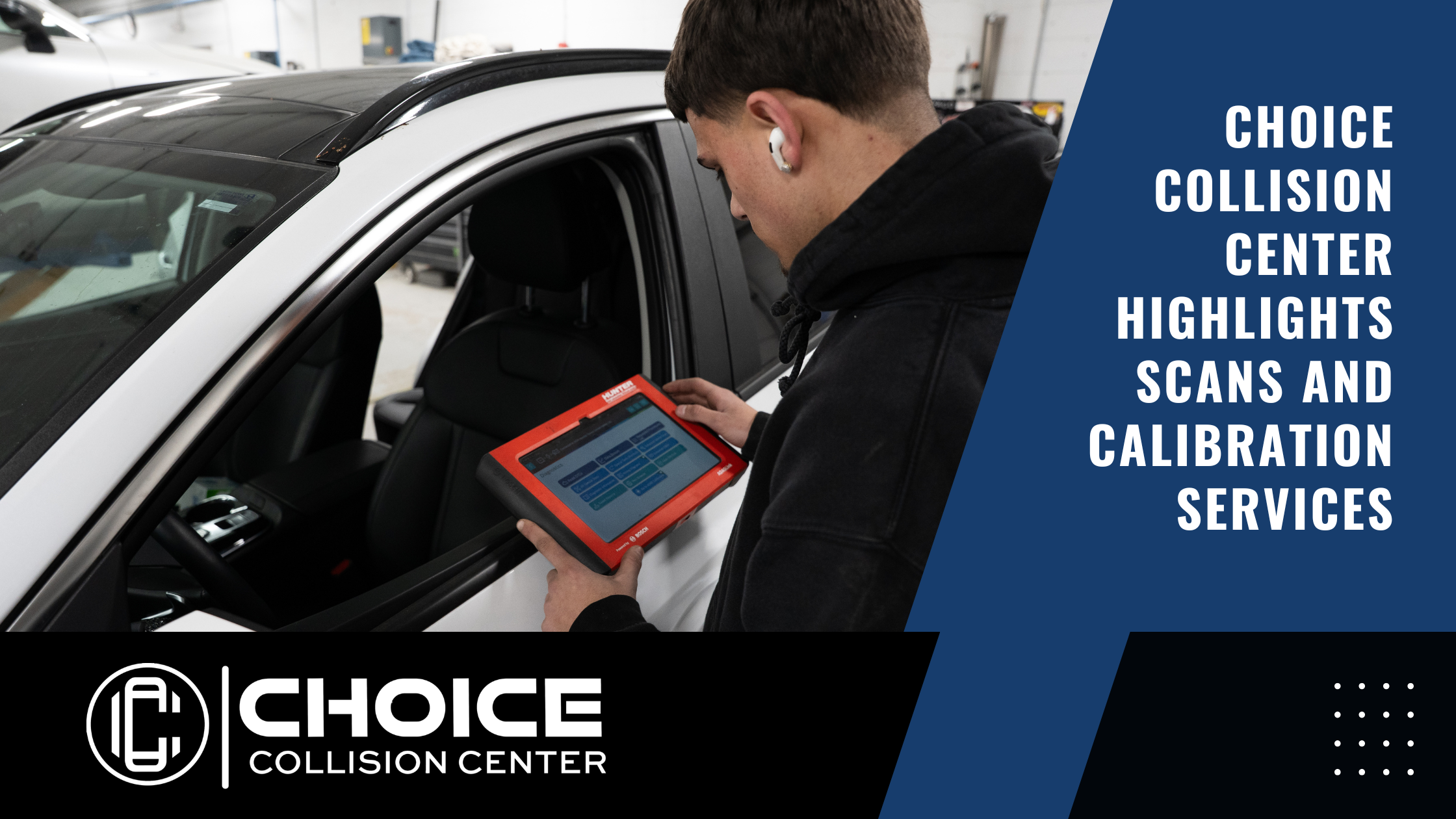
Choice Collision Center provides scanning and calibration services as part of its collision repair process. The company states that modern vehicle repairs frequently involve evaluating electronic systems before, during, and after repairs to help identify diagnostic issues and support proper system operation.
"Vehicle technology continues evolving rapidly," said a representative of Choice Collision Center. "Scanning and calibration procedures help verify that vehicle systems are functioning according to manufacturer requirements following repairs."
The company notes that advanced driver-assistance systems, commonly referred to as ADAS, may include features such as forward collision warning, lane departure warning, adaptive cruise control, blind spot monitoring, parking assistance, and automatic emergency braking. Many of these technologies rely on precise sensor positioning and calibration to function as intended.
According to Choice Collision Center, collision damage, component replacement, structural repairs, windshield replacement, and wheel alignment adjustments can all affect systems that depend on cameras, radar sensors, and other electronic components. Calibration procedures help verify that these systems continue operating within manufacturer specifications after repairs are completed.
Industry organizations and vehicle manufacturers increasingly emphasize the importance of pre-repair and post-repair scanning procedures. Diagnostic scans can help identify system faults, stored error codes, and electronic issues that may not be visible during a physical inspection. Post-repair scans help confirm that repairs have been completed and that vehicle systems are communicating properly.
The company also notes that calibration requirements vary significantly depending on vehicle manufacturer, model, and equipment configuration. Some systems require static calibrations performed in a controlled environment, while others may require dynamic calibrations conducted under specific driving conditions.
According to Choice Collision Center, scanning procedures have become increasingly important as vehicles incorporate additional electronic modules and interconnected systems. Modern vehicles often contain numerous onboard computers that communicate with one another to support vehicle operation, safety functions, and driver-assistance technologies. Diagnostic scans help technicians identify system alerts and evaluate whether additional inspections or calibrations may be necessary following a collision.
The company states that repair planning frequently includes reviewing manufacturer recommendations related to scanning and calibration requirements. Vehicle manufacturers may specify diagnostic procedures following repairs involving structural components, bumper systems, suspension components, windshields, or safety-related equipment. Reviewing this information helps establish a repair strategy based on vehicle-specific requirements.
Choice Collision Center further notes that calibration procedures often require specialized equipment, controlled work environments, and technician training. Because calibration requirements can vary significantly among vehicle manufacturers, repair facilities continue investing in diagnostic resources and ongoing education to remain informed about evolving vehicle technologies and repair procedures.
The company also highlights the role of quality-control procedures throughout the repair process. Diagnostic scans, calibration verification procedures, and final inspections may be performed at various stages of repairs to help support system functionality and repair documentation before vehicle delivery.
As vehicles continue incorporating additional safety technologies, repair facilities face increasing demands related to technician training, diagnostic equipment, and manufacturer repair information. Choice Collision Center states that maintaining scanning and calibration capabilities remains an important component of supporting modern collision repair procedures.
The Fall River facility continues serving vehicle owners who require collision repair and vehicle restoration services involving advanced safety technologies and electronic systems. Through its repair process, Choice Collision Center aims to support vehicle safety, repair quality, and customer confidence throughout the restoration experience.
More information about scans and calibration services is available through Choice Collision Center. Additional company updates and announcements are available through Choice Collision Center on TikTok.
About Choice Collision Center
Choice Collision Center provides collision repair, auto body repair, paint refinishing, structural repair, OEM-certified repairs, glass replacement, wheel alignments, scans and calibrations, and vehicle restoration services. The company operates repair facilities in Rhode Island and Massachusetts and focuses on manufacturer-recommended repair procedures, technician development, and customer communication throughout the repair process.
###
For more information about Choice Collision Center, contact the company here:
Choice Collision Center (Fall River)
Steve Melo
(401) 245-0213
information@choicecollisioncenters.com
645 Brayton Ave, Fall River, MA 02721