
Bale Collision Center is discussing the benefits of paintless dent repair (PDR) as an efficient solution for certain types of cosmetic vehicle damage while helping preserve a vehicle's original factory finish.
According to the company, paintless dent repair has become an increasingly popular repair method for minor dents, door dings, and some hail damage because it restores damaged body panels without requiring sanding, body filler, or repainting when the paint surface remains intact.
Serving drivers throughout Little Rock and surrounding Central Arkansas communities from its Chenal location, Bale Collision Center provides paintless dent repair as part of its comprehensive collision repair services. Every vehicle is carefully inspected to determine whether PDR is an appropriate repair method based on the location, size, and severity of the damage.
"Paintless dent repair can be an excellent option when the damage meets the proper conditions," said a representative of Bale Collision Center. "Every repair begins with a thorough inspection so our technicians can determine the approach that best restores the vehicle while preserving its original finish whenever possible."
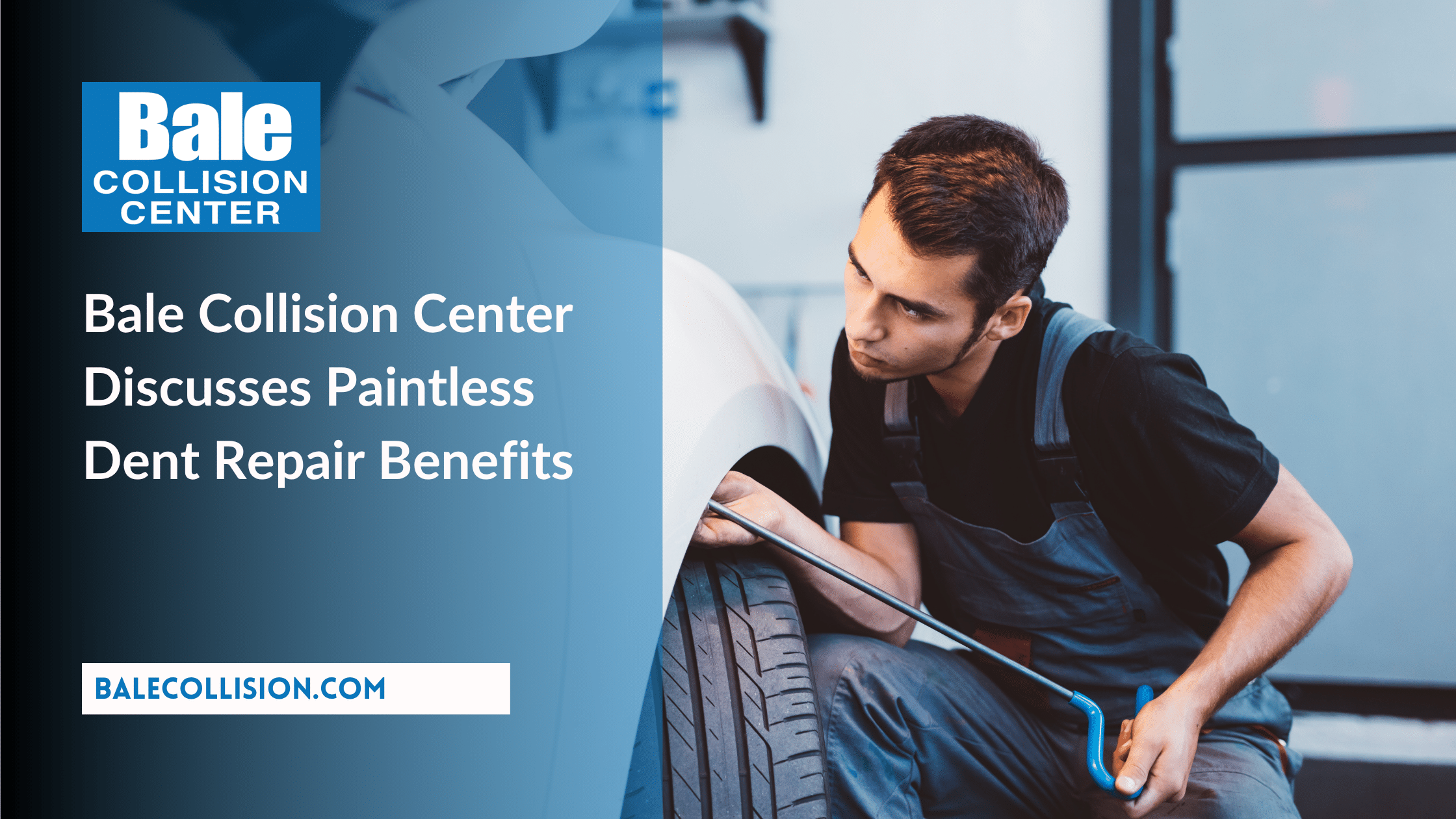
The company explains that paintless dent repair works by carefully reshaping damaged metal panels using specialized tools designed to access the back side of the dent. Instead of replacing body panels or refinishing painted surfaces, technicians gradually return the metal to its original contour while maintaining the factory-applied paint.
According to Bale Collision Center, one of the primary advantages of paintless dent repair is the ability to preserve the original finish. Factory paint is applied under highly controlled manufacturing conditions, making it beneficial to retain whenever damage has not compromised the paint surface. Maintaining the original finish also eliminates the need for paint blending or color matching in many qualifying repairs.
The company notes that paintless dent repair is commonly recommended for damage caused by shopping carts, parking lot door dings, minor impacts, and certain hailstorms. Because these types of incidents often leave dents without breaking the paint, many vehicles may qualify for PDR following a professional inspection.
However, Bale Collision Center emphasizes that not every dent can be repaired using paintless methods. During the evaluation process, technicians consider several factors, including the depth of the dent, the condition of the paint, the amount of metal stretching, the location of the damage, and whether the affected area can be safely accessed using specialized repair tools. Sharp creases, cracked paint, or structural damage may require conventional auto body repair instead.
The company believes careful inspections are essential to selecting the appropriate repair strategy. Rather than applying the same solution to every vehicle, technicians evaluate each repair individually and recommend the method that best addresses the specific damage while supporting the long-term appearance and integrity of the vehicle.
Paintless dent repair can also complement traditional collision repair. According to Bale Collision Center, some vehicles experience a combination of cosmetic dents and more significant collision damage. In these situations, technicians may use paintless dent repair on qualifying panels while performing conventional body repairs on other damaged areas. This flexible approach allows repair methods to be tailored to the condition of each vehicle.
Customer education remains an important part of the repair process. Many vehicle owners are unfamiliar with paintless dent repair and often ask whether it is appropriate for hail damage, minor collision damage, or parking lot dents. Bale Collision Center believes explaining the advantages and limitations of PDR helps customers better understand their repair options while making informed decisions about vehicle restoration.
The company also notes that advancements in vehicle manufacturing continue influencing paintless dent repair techniques. As manufacturers introduce lightweight materials and new body panel designs, technicians continue participating in ongoing education to remain familiar with evolving repair methods and industry best practices.
Bale Collision Center remains committed to combining experienced technicians with specialized repair equipment to provide repair solutions that address a wide variety of cosmetic vehicle damage. Whether a vehicle qualifies for paintless dent repair or requires traditional collision repair, the company's focus remains on selecting the repair method that best fits the specific condition of the vehicle.
Through its continued emphasis on paintless dent repair, Bale Collision Center serves drivers throughout Little Rock and surrounding Central Arkansas communities with repair solutions designed to preserve vehicle appearance while maintaining professional repair standards. The company continues investing in technician education and specialized repair techniques to support the evolving needs of today's vehicle owners.
More information about paintless dent repair services is available through Bale Collision Center. Additional company updates and repair information are available through Bale Collision Center on Facebook.
About Bale Collision Center
Bale Collision Center is a collision repair provider serving drivers throughout Central Arkansas with locations in Chenal and Downtown Little Rock. The company provides collision repair, auto body repair, paintless dent repair, ADAS calibration, auto paint refinishing, glass replacement, and related vehicle restoration services. Bale Collision Center emphasizes technician education, manufacturer-informed repair procedures, advanced repair technology, and customer communication throughout every stage of the repair process.
###
For more information about Bale Collision Center, contact the company here:
Bale Collision Center (Chenal)
Jason Spiller
(501) 221-7181
jspiller@baleautomotive.com
13101 Chenal Pkwy, Little Rock, AR 72211, United States